Nervous System Chiropractor in Denver: A Somatic, Trauma-Informed Approach to Care
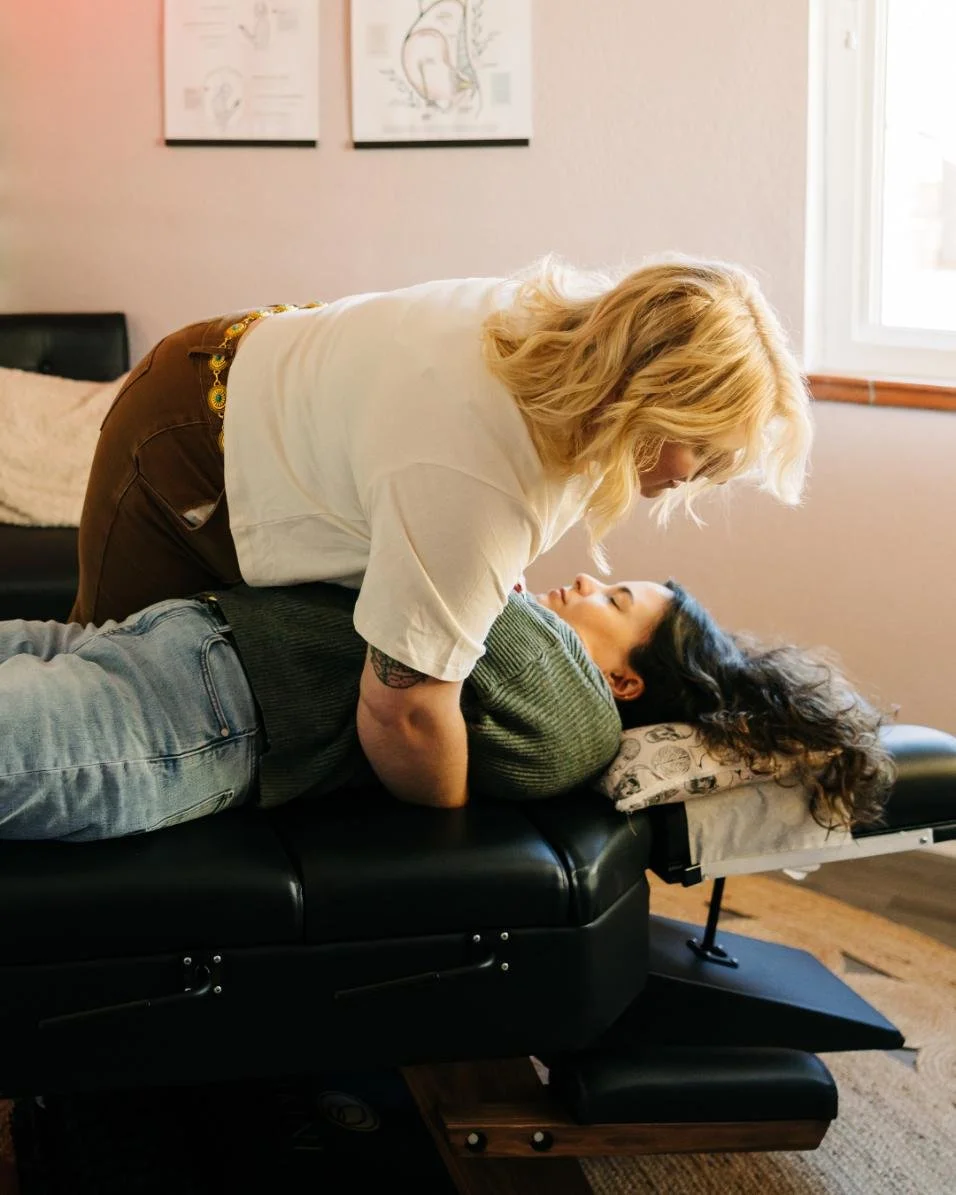
Nervous system chiropractic is different from the more mechanistic model of chiropractic care that focuses only on joints or alignment. As a nervous system chiropractor in Denver, my work centers on the nervous system as the foundation of health because everything from movement and pain to stress and healing is guided by it.
Rather than trying to “fix” the body, nervous system chiropractic looks at how your nervous system is responding to stress, injury, and lived experience. When the nervous system is stuck in survival mode, the body can hold tension, pain, or feel unsafe in movement. A somatic approach to chiropractic care supports regulation, adaptability, and a greater sense of ease over time.
Care is always consent-based and grounded in somatic awareness. We move at your pace, talk through what’s happening, and prioritize safety throughout your visit.
And just to be clear: this is hands-on, manual chiropractic care that is evidence-informed and rooted in anatomy and neurology. It’s not energy work or forceful adjusting. The goal is to support your nervous system so your body can do what it’s designed to do: adapt, heal, and feel more at home in itself.
What Is Nervous System Chiropractic Care?
Nervous System–Based vs. Mechanistic Chiropractic
Nervous system chiropractic (sometimes called nervous system–based chiropractic) prioritizes how well the nervous system is regulating, communicating, and adapting to stress. Instead of asking, “What joint is out of place?” this approach asks, “How is the nervous system responding, and what does it need to feel safer and more supported?”
In more mechanistic chiropractic care, the focus is often on structure alone: correcting a specific joint, reducing a symptom, or addressing one area in isolation. While that can be helpful in certain situations, it doesn’t always account for the bigger picture—especially when stress, trauma, chronic pain, or complex nervous system patterns are involved.
Nervous system–based chiropractic looks at the body as an interconnected whole. A stiff neck, sore low back, or hip pain isn’t treated as a stand-alone problem, but as part of a larger nervous system pattern. The goal isn’t to “fix” one joint—it’s to support whole-body regulation so the nervous system can communicate more clearly and the body can move, respond, and heal with greater ease.
This style of chiropractic care supports adaptability over time, helping your system become more resilient rather than just temporarily corrected.
How the Nervous System Influences Overall Health
The nervous system is the body’s main control and communication center. It coordinates movement, digestion, hormone signaling, immune response, and how we perceive and respond to stress. In other words, your nervous system plays a role in nearly every aspect of overall health.
When the nervous system is under constant stress or disruption, the body may shift into patterns of tension, pain, digestive issues, fatigue, or heightened stress responses. This is often connected to the autonomic nervous system—the part responsible for automatic functions like heart rate, breathing, digestion, and fight-or-flight responses. If the autonomic nervous system spends too much time in survival mode, the body has fewer resources available for rest, repair, and healing.
A regulated nervous system supports the body’s natural healing capacity, resilience, and tolerance to stress. Rather than forcing change, nervous system–focused chiropractic care aims to create the conditions that allow the body to respond more efficiently and recover more easily over time. Supporting nervous system health means improving how the body processes and adapts to what it encounters so you can move through daily life with more stability, flexibility, and ease.
The Nervous System, Fascia, and Somatic Memory
Fascia, Myofascial Work, and the Body’s Memory
Fascia is a connective tissue that wraps around muscles, organs, and joints, helping the body adapt to posture, movement, stress, and injury. Over time, fascia can become restricted or less adaptable, which may contribute to tension, pain, or limited movement.
Myofascial work is a hands-on approach that supports how fascia and the nervous system interact. Because fascia is closely connected to the nervous system, some people notice physical sensations or emotional responses during care. From a somatic perspective, this is understood as the nervous system processing information or previous trauma. Any emotional response is treated with respect, choice, and grounding. The focus remains on safety, awareness, and supporting the body’s capacity to respond at its own pace.
Why Myofascial Work Can Feel Different for Each Person
Myofascial work, cupping, and other manual therapies can feel different from person to person and even from one visit to the next. Sensations may range from pressure or warmth to subtle shifts in awareness. These responses reflect how your nervous system is processing input in the moment.
From a somatic perspective, care is paced intentionally to support nervous system regulation. That means checking in, adjusting pressure, and responding to your cues rather than pushing through discomfort. Consent and communication are built into every session. The goal of myofascial work is to support safety, regulation, and adaptability, allowing your nervous system to respond in the way that’s most appropriate for you. Myofascial work is part of every visit to ensure that adjustments can hold better over time.
Chiropractic Techniques Used in Nervous System Care

Manual Adjustments Rooted in Anatomy (Not Energy Work)
Nervous system chiropractic uses manual chiropractic adjustments that are grounded in anatomy, neurology, and biomechanics. Care is hands-on and evidence-informed, with techniques chosen based on how your body and nervous system are responding—not on a one-size-fits-all approach.
This style of chiropractic adjustment is not energy work. While the force of an adjustment may vary from gentle to more direct the philosophy stays the same: support nervous system function, communication, and adaptability.
Whether an adjustment is light force or a more traditional crunchy vibe, the goal of nervous system chiropractic is to meet your body where it is and support change in a way that feels safe, intentional, and appropriate for you.
Techniques Used at Jade Wellness
Our office provides many different myofascial and chiropractic techniques that vary in force, but not philosophy. We work with the patient to decide which techniques will work best for their body to provide optimal relief and healing based on their comfort level and nervous system response. This allows for a more collaborative and adaptable patient - provider experience that is custom tailored to each unique body and history. The techniques we offer are:
Diversified: This is the typical adjustment style that you may have seen or experienced before, known for its hands-on approach to moving joints and most often provides that “popping” sound associated with adjustment. This is considered a high-force technique.
Thompson: This technique uses a drop (or break away) table that allows the level of force to be adjusted based on a patient's body. This is considered a medium to low force technique and does not typically involve any joint “popping” .
Activator: This technique involves the use of a tool known as an Activator that is placed on trigger points to reduce their presence and help your body self-adjust. It makes a “clicking” sound and is considered the lowest force technique. It is ideal for patients with joint instability, extreme levels of tension, or those who wish not to be manually adjusted.
Graston: This is a myofascial release technique that uses a stainless steel tool to remove tension and adhesion from the body. It is part of all visits in our office to help patients reconnect to tissue and hold adjustments.
What Nervous System Chiropractic Looks Like at Jade Wellness
Mirror in the adjustment room: We provide a mirror so you can see behind your body — literally see what’s happening with your spine, your shoulders, your posture, and your provider. Want to watch the movement? Go for it. Want to close your eyes? That’s fine too. Because you decide.
Full explanation before we touch you: We introduce each tool, each motion, each part of the table before we use it. No surprises. We’ll walk you through it. No secrets, no surprises, and consent with each adjustment.
Face-up the whole time: Many folks feel vulnerable lying face down — especially if past trauma is part of the landscape. We offer face-up adjustments for any body region so you’re in the driver’s seat.
Multiple styles of adjustment: Loud pops? If that’s triggering, we’ve got gentler options — instrument-assisted, velocity-free, mobilizations, muscle work. We collaborate with you: what do you want? What does your nervous system feel safe with? We also understand this changes from visit to visit so we stay flexible and every changing just like you.
Language of empowerment: We’ll ask: “What do you need? What feels ok? Where do you want more/less pressure?” This means you’re an active participant in your adjustment.
Inclusive, LGBTQ-friendly environment in Denver: As a chiropractor who specializes in healing for the LGBTQ community, I know there is an added layer of minority stress, micro-trauma, identity-based trauma. We honor all identities and histories, meeting you where you are.
Aftercare in your control: You’ll leave with options for self-care, nervous system reset tools (hello, vagus nerve!), and the invitation to check in: “How did that feel? What do we change next time?” We don’t assume we got it right — we ask.
All of these choices are designed to support nervous system regulation by increasing predictability, agency, and safety during chiropractic care. When your nervous system knows what’s coming, has options, and is respected at every step, it’s better able to settle out of survival mode and engage in healing, adaptability, and connection—on your terms.
Integrated Care Beyond Adjustments
Our chiropractic appointments are never a one-size-fits-all approach. Instead, we customize each visit to fit your needs at that time based on what your body is telling you. Included in the price and time of each visit is the access to myofascial work, cupping, k-taping, and even e-stim when each modality is appropriate and necessary. Together, these tools optimize your nervous systems ability to regulate and reconnect.
Identity-Affirming, LGBTQ+ Inclusive Environment
Trauma is ubiquitous in the community we serve. According to a systematic review, nearly 90 % of U.S. adults report exposure to traumatic events. When trauma lives in the nervous system, it affects how someone responds to touch, to transitions, to being told what to do. A “normal” adjustment — loud crack, surprise moves, no mirror, no explanation — can inadvertently trigger a stress response.
In healthcare, trauma-informed care means shifting the question from “What is wrong with you?” to “What is your body trying to tell us?”. It means building safety, choice, transparency, collaboration, and avoiding re-traumatization.
So when you walk into our space in Denver, this is what trauma-informed chiropractic care really looks like.
Benefits of Seeing a Nervous System Chiropractor

Improved Regulation and Stress Resilience
When the nervous system is better regulated, it’s more able to shift out of fight-or-flight and into states that support rest, clarity, and connection. This can look like feeling safer in your body, more grounded, and better able to respond to stress without becoming overwhelmed.
Over time, nervous system regulation may support emotional health, mental clarity, and improved stress tolerance. Rather than eliminating stress, the goal is to help your system recover more efficiently and move through daily life with greater stability and resilience.
Relief From Chronic Pain and Tension
Chronic pain is often connected to ongoing nervous system tension and fascial restriction, especially when the body has been stuck in protective patterns for a long time. When the nervous system is under stress, muscles and connective tissue may stay guarded, contributing to physical tension and persistent discomfort.
By supporting nervous system regulation, chiropractic care can help reduce these protective pain patterns over time. The focus isn’t on forcing change, but on helping the body feel safe enough to let go of holding patterns that no longer serve it.
Long-Term Nervous System Support
Care doesn’t stop when your visit ends. Long-term nervous system support includes aftercare options, simple between-visit regulation tools, and ongoing check-ins to see what’s helping and what needs adjusting.
This is a collaborative process rooted in empowerment, body awareness, and adaptability. Your feedback guides care, and your nervous system gets to evolve at its own pace because sustainable change happens when you’re an active participant.
What to Expect at Your First Visit
1. Before Your Appointment
Bring any notes about things you’ve found triggering in past bodywork/adjustments — loud crack, surprise moves, lying prone for long, etc.
Tell us ahead of time if you prefer face-up, if you want mirror viewing, or if there are positions you prefer not to be in.
Create your signal: “When you feel something you don’t like, raise your hand” — we’ll honor it.
Give yourself a little buffer before and after your appointment to just be — your nervous system likes transitions. We offer a snack and coffee area in the lobby so you can take your time.
Stay curious: We’re not here to fix you, we’re here to support you in your body’s innate wisdom.
2. During the Adjustment
Mirror option
Explanations before touching
Face-up positioning
Gentle tools
3. Aftercare & Integration
Snacks, coffee area
Buffer time for transitions
Check-ins
Self-care tools
Is Nervous System Chiropractic Right for You?
If you are looking for a space that offers individualized approaches to nervous system regulation and relief, our office might be just the place! Nervous system based chiropractic care can help reduce the effects of chronic stress and tension, alleviate pain that isn't responsive to traditional management and so much more. It is there to help you reconnect to your body when you have a history of trauma or dysregulation. We offer pacing that fits your body and needs based on your consent and comfort level so that you can feel in control through the healing process.
-Dr. Savannah
FAQs About Nervous System Chiropractic
What is a nervous system chiropractor?
A nervous system chiropractor focuses on how the spine, nervous system, and body communicate, rather than only addressing isolated pain or structural issues. Care is designed to support regulation, adaptability, and overall nervous system function using manual chiropractic techniques and supportive therapies.
How is this different from traditional chiropractic?
Traditional or mechanistic chiropractic often centers on correcting specific joints or reducing symptoms. Nervous system chiropractic looks at how the body responds to care as a whole, emphasizing safety, consent, pacing, and nervous system regulation alongside spinal and myofascial treatment.
Is nervous system chiropractic safe for trauma survivors?
Yes. Nervous system chiropractic at Jade Wellness is trauma-informed, meaning care is guided by choice, consent, and clear communication at every step. Techniques and pressure are adapted to your comfort level to help avoid overwhelming the nervous system.
Do emotional reactions ever happen?
Sometimes. Because the nervous system and fascia are closely connected, myofascial work or manual care may occasionally bring up emotional responses. These reactions are not forced or expected, and care is always adjusted to support safety and comfort if they occur.
Do I have to talk about my trauma?
No. You are never required to share details about your trauma. Care can be fully effective using body-based feedback, preferences, and consent without discussing personal history unless you choose to.
Book Your Appointment
If you’re looking for a nervous system chiropractor who prioritizes safety, consent, and somatic awareness, Jade Wellness in Denver is here to support you. Book your appointment today.